2024

TalentoYFuturo-SalesianosZaragoza-FormaciónProfesional-SoftSkills-LiderazgoJuvenil-Emprendimiento-ProyectosEuropeos
Home News News

VI Talent and Professional Future Conference at Salesianos Zaragoza

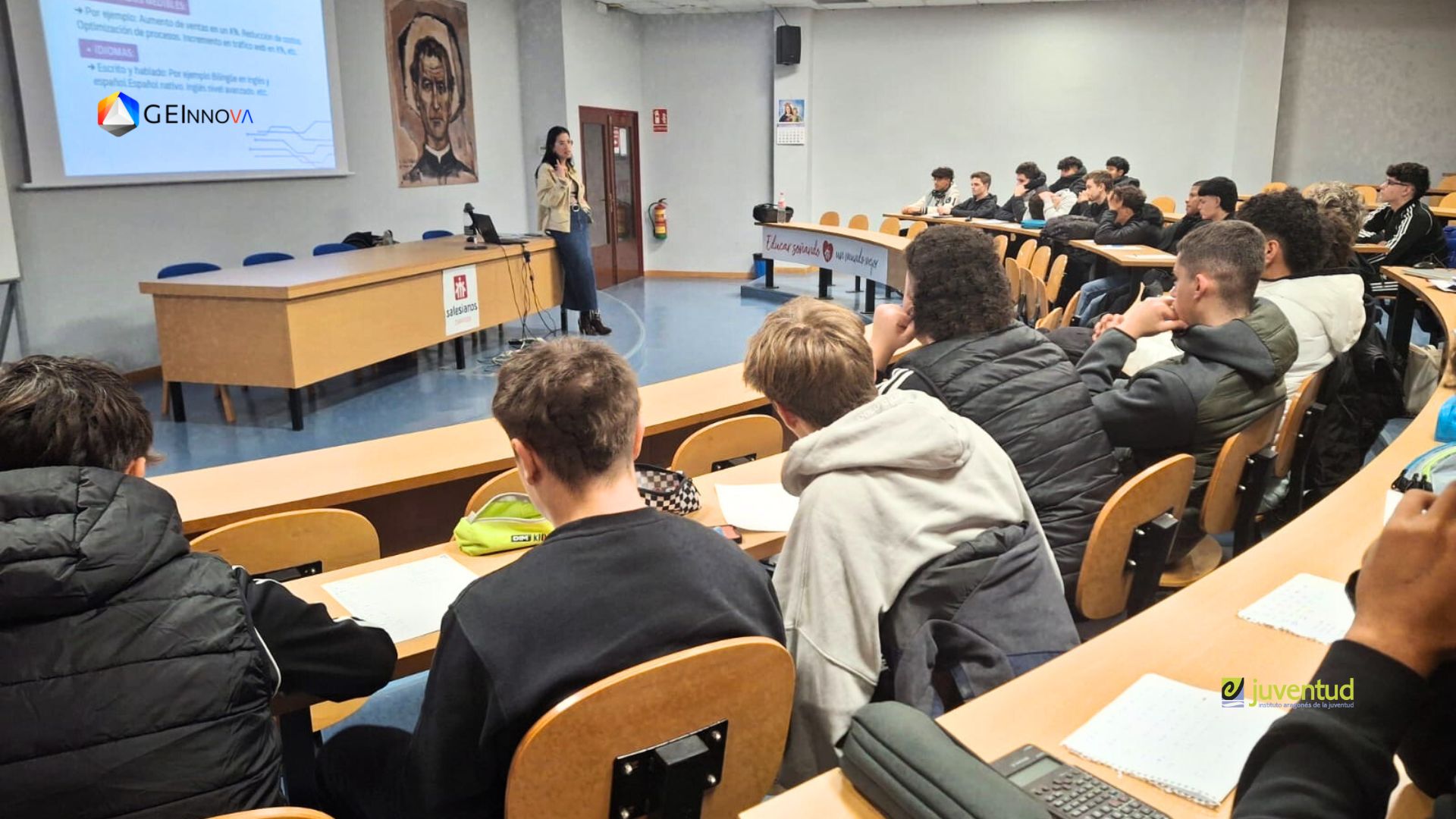
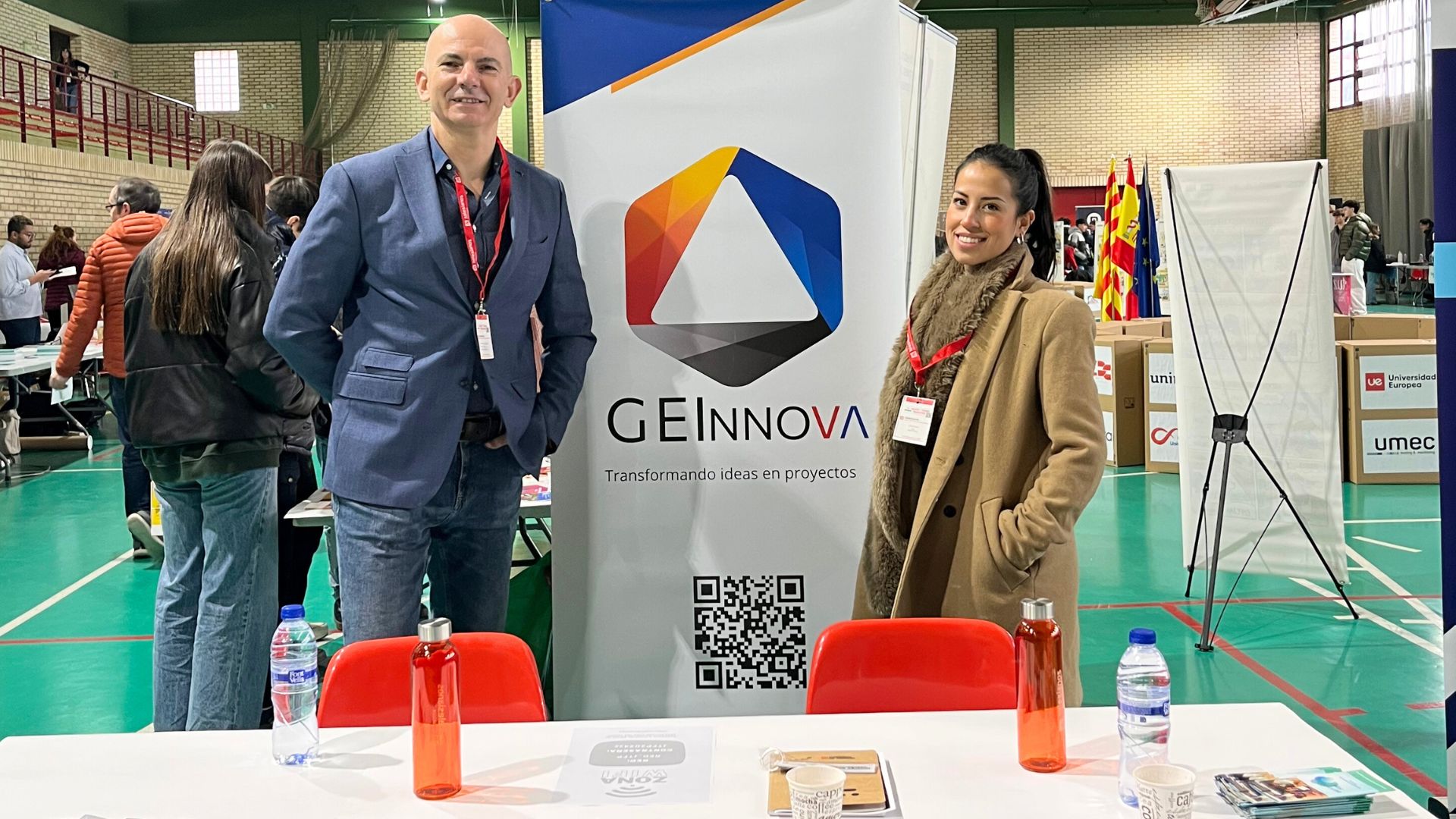
On December 13, GEINNOVA participated in the VI Talent and Professional Future Conference organized by the Salesianos Zaragoza School. This event was held to inspire and guide students from ESO, Bachillerato, and Vocational Training programs.

It brought together 41 companies, entities, and individuals committed to fostering talent and future opportunities. During the conference, GEINNOVA emphasized the importance of inspiring students interested in exploring new possibilities for their academic and professional futures.

GEINNOVA, as a company dedicated to innovation and training, shared its dual expertise as a training company specializing in soft skills for entrepreneurship, helping young people develop key competencies such as communication, leadership, and resilience through talks and workshops; and as a consultant for European projects, promoting innovative initiatives that connect talent, entrepreneurship, and international opportunities.

This is yet another example of Salesianos Zaragoza’s commitment to:

    1. Providing a comprehensive and inclusive education oriented toward the professional future of its students.
    2. Incorporating new technologies and innovative approaches into academic training.
    3. Creating a sense of community and pride among students, families, and collaborators.


At GEINNOVA, we are very proud to be part of an educational community that fosters talent and looks confidently toward the future.

#TalentAndFuture #SalesianosZaragoza #VocationalTraining #SoftSkills #YouthLeadership #Entrepreneurship #EuropeanProjects

soolfood 1
Home News News

The project focused on improving the integration of immigrant women through cooking.

The SOUL Food project brought together teams from five countries in Vienna to launch a unique initiative: using cooking as a tool to empower migrant women, improve their employment opportunities and foster cultural exchange. During this meeting, key activities were planned, such as the creation of a learning platform, the design of community workshops and the collection of success stories that will serve as examples for other communities in Europe. It took place on November 11 and 12, 2024.

Meeting activities

For two days, teams from Austria, Italy, Greece, Spain and Sweden worked together to organize and plan the first actions of the project. The main activities included:

  • Allocating tasks and responsibilities among the participants.
  • Reviewing ways of organizing the project to make it efficient and transparent.
  • Designing activities that combine social inclusion and cooking as a way of learning.
  • Plan next steps, such as collecting examples of success and preparing activities in local communities.
  • Discuss how to raise awareness of the project to reach as many people as possible.
Objectives of SOUL Food

The project wants to:

  • Improve the job and digital skills of migrant women.
  • Create closer-knit communities using cooking as a meeting point.
  • Provide educators with practical tools to replicate this model elsewhere in Europe.

During the meeting, ideas and tools, such as a digital learning platform and a trainer’s guide, were discussed to help achieve these goals.

Why this meeting was important

The meeting allowed participants to coordinate and create a clear plan for the next two years. It also allowed for an exchange of ideas and cultures between countries, demonstrating that working together can be a great force for change.

Next steps

In the coming months, the team will work on:

  • Identifying practical and useful examples that can serve as inspiration.
  • Organizing activities with the communities to start implementing the project.
  • Developing innovative tools and resources so that more people can benefit.

The Vienna meeting was a great step forward, showing how collaboration between countries can help overcome challenges and build bridges between different cultures.

Formación-Emprendimiento-Rural-Aragón-Emprende-Digitalización-Rural-Sostenibilidad-Empresarial
Home News News

Boosting rural entrepreneurship: new training for technicians and entrepreneurs of the ARCE network

The Aragon Emprende Foundation, together with GEINNOVA, announces the approval of a training plan designed to transform entrepreneurship in rural areas of Aragon.
The main objective of this training is to train both the technicians of the Arce Network and the rural entrepreneurs themselves who seek to consolidate their place in the market, launch their business ideas or digitise their businesses.
The Aragon Emprende Foundation, committed to sustainable socio-economic development, seeks to consolidate an innovative business fabric in Aragon through specialised training, the promotion of cooperation between entrepreneurs and technicians and the creation of collaborative learning spaces, promoting innovation, digitalisation and sustainability in rural areas.
Divided into two modules of 65 hours each, this training will address key aspects such as digitalisation, the development of sustainable business models and leadership skills, and coaching and mentoring techniques. This new training plan reinforces its mission by providing practical tools, through the Maple Network, to entrepreneurs to face the specific challenges of the rural environment. It also represents a strategic step towards strengthening the region’s entrepreneurial ecosystem, with a focus on sustainability and innovation.

This initiative is expected to result in the retention of local talent and the economic revitalisation of rural areas, promoting business projects that generate employment and value in the region.

#RuralEntrepreneurship #AragónEmprende #RuralDigitalisation #EntrepreneurialSustainability #RuralTalent

geinnova-iaj-marca-personal-branding-linkedin-jovenes
News

The IAJ and GEINNOVA are running training courses for the employability of young people.

During the months of November and December, GEINNOVA is carrying out the training ‘How to use your social networks to get a job’, to help young Aragonese to stand out in today’s job market.

The aim of these trainings is to empower more young Aragonese to successfully face the challenges of the labour market and access quality jobs. Above all, it is focused on fundamental skills such as self-knowledge, personal brand management and the development of soft skills, which are essential to stand out in selection processes. In the practical sessions, participants learn how to design an impressive CV, write persuasive cover letters, create attractive digital profiles and build a professional network on job search platforms. In addition, special emphasis is placed on teaching participants what a personal brand is and how to create it through examples in an authentic way that reflects their skills and values.

Thanks to the Aragonese Youth Institute (IAJ), this programme, which is being developed in 25 vocational training centres in Zaragoza, Jaca, Fuentes de Ebro, Utrillas, Aínsa, Sabiñánigo and Fraga, among others, is teaching key tools to create a digital presence on platforms such as LinkedIn and InfoJobs, is just the beginning of a series of trainings focused on strategic competences such as digitalisation, leadership and continuous improvement of job skills.

#PersonalBranding #Employability #SocialNetworking #LinkedInTips #SoftSkills #Digitalisation #IAJTraining

Sould Food_Geinnova
News

Flavours that unite: Cooking as a bridge to social integration

In recent years, Europe has seen an increase in migration flows from diverse regions, each with a unique culture and specific challenges in integrating into a new social, economic and cultural context. While migrants enrich the cultural and economic fabric of host countries, they face significant barriers to full inclusion, making the process challenging for many.

The situation in Spain

Spain has become a key destination for many migrants, especially women from Latin America, Africa and Asia. The integration of these women is marked by obstacles that limit access to stable employment, education and social services. Language barriers and lack of local networks often create a sense of isolation and make it difficult to access basic services. In addition, cultural stereotypes and prejudices aggravate their marginalisation, making their inclusion even more difficult.

GEINNOVA’s commitment
GEINNOVA has long promoted social inclusion and support for vulnerable groups, including migrant women. The organisation focuses on skills development and empowerment, providing practical resources and innovative models for sustainable integration.

The SOULFOOD Project
Within the Erasmus+ programme, the SOULFOOD project is dedicated to promoting the social and labour integration of migrant women through culinary training and cultural exchange. Through modular educational pathways, SOULFOOD helps these women to overcome cultural and linguistic barriers, equipping them with culinary skills that can facilitate their integration into the labour market and improve their digital literacy.

SOULFOOD project activities:

  • Analysis and collection of good practices: Creation of a repository with successful initiatives of cultural integration through cooking.
  • Intercultural events and culinary meetings
  • Modular educational itinerary
  • Digital tools and guides for educators
  • Pilot training sessions

Towards inclusive and sustainable integration
SOULFOOD represents an innovative approach to overcoming the challenges faced by migrant women. By focusing on culinary training and digital skills development, the project helps these women build confidence, achieve economic independence and actively participate in community life. With the support of initiatives such as SOULFOOD, migrant women can move towards a more inclusive society that recognises and values their contribution.

Formacion-geinnova-ayuntamientozaragoza-escritura
Home News News

Zaragoza City Council counts on GEINNOVA to give a course on writing techniques

Zaragoza City Council has entrusted GEINNOVA with the development of a training course aimed at its employees, in order to strengthen their skills and improve the quality of public services. This training, in online mode, began on Monday 4th November, and marks the start of a series of activities focused on professional improvement and continuous training.

The course, entitled ‘Effective Writing Techniques’, provides an opportunity to explore practical strategies for mastering effective writing in public administration. Participants have the opportunity to learn techniques for expressing themselves clearly and accurately, perfecting their spelling and grammar, and mastering the drafting of emails and administrative documents in a professional manner. All content will be delivered via an eLearning platform which will structure the lessons in an accessible and didactic way.

The programme is structured in different modules, with a total duration of 33 hours, which include:

  • Fundamentals of effective writing
  • Spelling and grammar
  • Professional email writing
  • Administrative writing style
  • Non-sexist use of language
  • Practical tips for effective writing

The main objective of this programme is to train municipal employees in areas that will optimise their performance and strengthen their professional skills, ensuring an appropriate use of tone and style in each document.

As a complement to this training, GEINNOVA will offer a webinar called “Mastering Administrative Writing ’ which will allow participants to resolve their doubts about the writing techniques presented in the course. It will also allow participants to interact, refine their understanding and put into practice what they have learned by addressing specific questions and scenarios in real time.

We will continue to collaborate to offer more training proposals and to continue to have a positive impact on the professional environment.

geinnova_proyecto_arch_grecia
Home News News

GEINNOVA participates in the European Cultural Heritage Days for the ARCH project in Greece

The ARCH project aims to improve students’ digital and cultural competences by leveraging cultural heritage. Through 3D virtual objects and digital tools, students explore their cultural environment in an interactive and collaborative way. The objectives include free online resources, a digital educational game and the integration of ICT to promote inclusive education connected to local culture.

As part of the European Cultural Heritage Days, ARCH project partners gathered in Corfu (Greece) for the final project meeting, organised by CulturePolis. This event highlighted the importance of connecting cultural heritage with the public in innovative ways.

On the second day, the partners participated in an interpretative tour of the Old Town of Corfu, entitled ‘Arts, Letters and Politics in the Old Town of Corfu’, designed by CulturePolis for the event. The tour explored the rich history and cultural heritage of the city, offering an in-depth insight into its artistic and political heritage. In addition, partners had the opportunity to test the interactive game and mobile application on cultural heritage, developed during the two years of project implementation for Android devices.

The European Cultural Heritage Days were the ideal framework for ARCH partners to immerse themselves in the local cultural context. The walk through the historic sites of Corfu not only reinforced the connection with the European heritage, but also underlined the importance of preserving and showcasing these cultural treasures.

During the meeting, the partners reflected on the progress of the project and planned the next steps, which include local dissemination events in several partner countries. These events will showcase ARCH’s digital tools and educational games, providing a hands-on experience for students and communities to interact with European cultural heritage.

As the ARCH project approaches its final phase, the European Cultural Heritage Days have been a reminder of the enduring value of European heritage and its role in building a shared cultural identity across Europe.

linkein (1)
Home News News

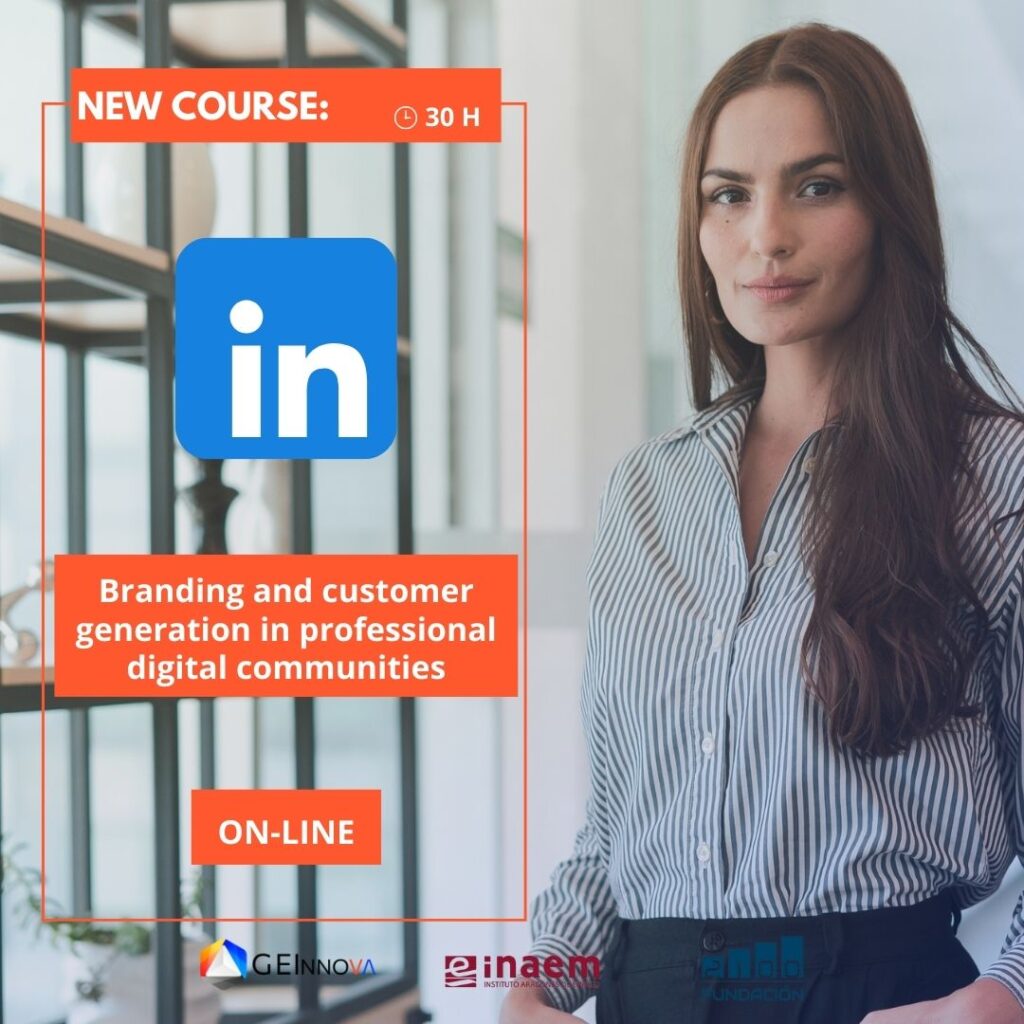
A new opportunity to boost your LinkedIn profile!

In today’s world, a strong digital presence is key to standing out in any industry. LinkedIn has become the leading platform for professionals, and now you have the opportunity to take advantage of its full potential.

We present the LinkedIn: Branding and Customer Generation in Professional Digital Communities course , delivered by Geinnova, INAEM and Fundación 2100. This programme is designed to provide you with the necessary tools and strategies to optimise your profile, generate business opportunities and expand your professional network. Furthermore, at the end of the course, you will receive an official certificate from INAEM accrediting your new skills.

What will you learn in this course?

  • Personal branding: Discover how to optimise your LinkedIn profile to reflect your experience and skills in a professional and attractive way.
  • Networking strategies: Learn how to create meaningful connections and build a strong network to boost your career.
  • Lead and lead generation: Master the key techniques for converting contacts into real business opportunities.
  • Positioning in digital communities: Take advantage of LinkedIn as a platform to be a reference in your sector and lead relevant conversations.

Course programme

  1. LinkedIn for Branding
    • Duration: 5 hours
    • Learn how to build a strong and attractive personal brand for other LinkedIn users.
  2. The leading network to generate clients
    • Duration: 5 hours
    • Strategies for finding and generating clients on LinkedIn, taking advantage of the platform’s tools.
  3. Quality Talent on LinkedIn
    • Duration: 5 hours
    • How to attract and recruit quality talent using LinkedIn’s professional networks.
  4. Increase your sales with LinkedIn
    • Duration: 6 hours
    • Techniques and strategies to increase your sales and create real business opportunities through LinkedIn.
  5. Advanced content strategies on LinkedIn
    • Duration: 5 hours
    • Learn how to create attractive and relevant content that will help you position yourself and gain visibility on LinkedIn.
  6. LinkedIn Advertising
    • Duration: 4 hours
    • Take advantage of LinkedIn advertising options to reach a wider and more targeted audience.

Why choose this course?

  • Up to date with the latest trends: The course provides you with the most up-to-date tools to stand out in a competitive digital environment.
  • Practical approach: You will not only learn theory; you will apply what you learn with practical exercises that you can implement from day one.
  • Ongoing support: Our team of experts will be on hand to answer any questions and make sure you get the most out of this training programme.

Don’t miss this opportunity to transform your career!

This course is aimed at professionals from all sectors who want to strengthen their LinkedIn presence, establish their personal brand and seize new business opportunities.

Geinnova-Proyecto-Soul Food
Projects

Soul Food

KA220-ADU-8E9C92E7

Soul Food pathways: Skills, Opportunities, Empowerment and Learning of Migrant Women through Food

Soul Food is an initiative that promotes social inclusion through culinary education and cultural exchange, focused on empowering migrant women to close skills gaps and foster their social and labour integration. Using digital and blended learning methodologies, the project seeks to dismantle cultural and language barriers, creating inclusive environments that favour equity and equality. This project is part of the Erasmus+ programme and involves partners from several European countries committed to inclusion and empowerment through education.

Soul Food’s approach is based on the belief that cooking, as a universal language, has the power to bring people together, transcending cultural differences and generating mutual understanding. Through this initiative, it seeks not only to offer job training opportunities, but also to provide a space where migrant women can express their cultural identity and connect with the local community in a meaningful way.

The Soul Food project has several main objectives:

  1. Firstly, it seeks to increase the integration of migrant women through the development of professional skills, citizenship competencies and social inclusion. The project offers personalised educational pathways, especially in culinary skills, to reduce skills gaps and labour market shortages, fostering a sense of belonging and active participation in the community.
  2. Another key objective is to promote the self-sufficiency of migrant women by providing them with the necessary tools to access employment opportunities and improve their quality of life. In addition, Soul Food focuses on improving the competencies of educators to effectively support a diverse student population, using digital tools and innovative methodologies. The training of educators is crucial to ensure that migrant women are adequately supported during their integration and learning process.


The project expects to achieve the following results:

  1. Modular Curriculum: Focusing on culinary skills, citizenship and digital learning. This curriculum includes modules on personal development and citizenship to promote the social integration and empowerment of migrant women. The modules are designed to be flexible and accessible, allowing participants to learn at their own pace and tailor their training to their specific needs.
  2. Cultural Exchange and Community Building: Organisation of workshops and cooking-based events to facilitate cultural exchange and the creation of inclusive spaces where migrant women can interact with the local community. These events not only aim to teach cooking skills, but also to foster a sense of belonging and build meaningful relationships between participants and members of the host community.
  3. Training of Educators: Development of digital tools and guidelines for educators, designed to improve the quality of education and enable the replication of innovative practices in the field of migrant integration. The training will focus on inclusive methodologies and empathy-based learning approaches, which are critical for working with vulnerable and diverse populations.
  4. Creation of Digital Learning Environments: Development of digital platforms that facilitate online learning and interaction between migrant women, educators and the community. These platforms will include multimedia educational resources and interactive modules to foster engaging and effective learning, ensuring that migrant women have access to modern tools to enhance their digital competencies.


The project partners are Austria, Sweden, Italy, Greece and Spain.

Acronym: Soul Food

Start date: 01-09-2024

End date: 31-08-2026

Geinnova-Proyecto-CulTMed
Projects

CulTMed

KA

CulTMed: Sustainable cultural tourism in the Mediterranean

Cultural tourism is a key sector for the EU economy, especially in the Mediterranean basin, where a wealth of cultural and natural heritage is concentrated. However, cultural tourism faces numerous challenges, such as loss of authenticity, over-commercialisation and negative environmental impact. CulTMed is presented as an innovative solution to address these challenges, promoting a sustainable and green approach to preserve cultural heritage while improving the quality of life of local communities. This project aims to turn cultural tourism into a sustainable development tool that respects both host communities and the environment.

The CulTMed project has several main objectives:

  1. Firstly, it will enhance the capacity of professionals and stakeholders in the cultural tourism sector through training and development of key competences. To this end, innovation networks will be fostered to enable the transfer of good practices between the different professionals and organisations in the sector.
  2. One of the main pillars of the project is the elaboration of a Best Practices report and the creation of a Digital Resource Library, which will serve as an accessible knowledge platform for all those interested in sustainability in the field of cultural tourism.
  3. CulTMed also seeks to actively involve local communities in the creation of more sustainable tourism models, ensuring that these communities benefit directly from tourism development. Furthermore, the project focuses on inclusion, gender equality and diversity, ensuring that all stakeholders have the opportunity to participate and contribute to the outcomes.

As part of the expected outcomes, the project will develop four distinct curricula, each focusing on an aspect of sustainable cultural tourism. These curricula will be designed to provide specific training to enable professionals and organisations in the sector to improve their skills and knowledge in sustainable practices:

  1. Sustainable Cultural Events: This curriculum will focus on how to organise and manage cultural events in a sustainable manner, minimising environmental impact and promoting responsible practices.
  2. Archaeological Site Tourism: This curriculum will address best practices for managing archaeological sites with a sustainable approach, ensuring heritage preservation and promoting respect for history and the environment.
  3. Museums/Galleries and Sustainability: This curriculum will teach how museums and galleries can adopt sustainable practices, both in exhibition management and daily operations, to contribute to sustainable development.
  4. Local Communities and Sustainable Cultural Tourism: This curriculum will focus on how local communities can engage in and benefit from sustainable cultural tourism, ensuring that tourism development is inclusive and equitable. CulTMed will also implement Living Labs, which will act as experimental spaces where new ideas and approaches to cultural tourism can be tested in less popular local communities. These Living Labs will allow local communities and other stakeholders to collaborate in the development of customised solutions that respond to their specific needs. In addition, a series of events involving policy makers, sustainability experts and community leaders will be organised to disseminate the project results and ensure their adoption at regional and European level. In this way, it is expected that the good practices collected, taught and tested will contribute to promote significant changes across EU society, fostering a more inclusive and environmentally friendly model of cultural tourism.


The project partners, committed to the vision of achieving a sustainable transition in the EU, are Spain, Greece, Cyprus, Italy and Portugal.

Acronym: CultMed

Start date:

End date: