October, 2024

geinnova_proyecto_arch_grecia
Home News News

GEINNOVA participates in the European Cultural Heritage Days for the ARCH project in Greece

The ARCH project aims to improve students’ digital and cultural competences by leveraging cultural heritage. Through 3D virtual objects and digital tools, students explore their cultural environment in an interactive and collaborative way. The objectives include free online resources, a digital educational game and the integration of ICT to promote inclusive education connected to local culture.

As part of the European Cultural Heritage Days, ARCH project partners gathered in Corfu (Greece) for the final project meeting, organised by CulturePolis. This event highlighted the importance of connecting cultural heritage with the public in innovative ways.

On the second day, the partners participated in an interpretative tour of the Old Town of Corfu, entitled ‘Arts, Letters and Politics in the Old Town of Corfu’, designed by CulturePolis for the event. The tour explored the rich history and cultural heritage of the city, offering an in-depth insight into its artistic and political heritage. In addition, partners had the opportunity to test the interactive game and mobile application on cultural heritage, developed during the two years of project implementation for Android devices.

The European Cultural Heritage Days were the ideal framework for ARCH partners to immerse themselves in the local cultural context. The walk through the historic sites of Corfu not only reinforced the connection with the European heritage, but also underlined the importance of preserving and showcasing these cultural treasures.

During the meeting, the partners reflected on the progress of the project and planned the next steps, which include local dissemination events in several partner countries. These events will showcase ARCH’s digital tools and educational games, providing a hands-on experience for students and communities to interact with European cultural heritage.

As the ARCH project approaches its final phase, the European Cultural Heritage Days have been a reminder of the enduring value of European heritage and its role in building a shared cultural identity across Europe.

linkein (1)
Home News News

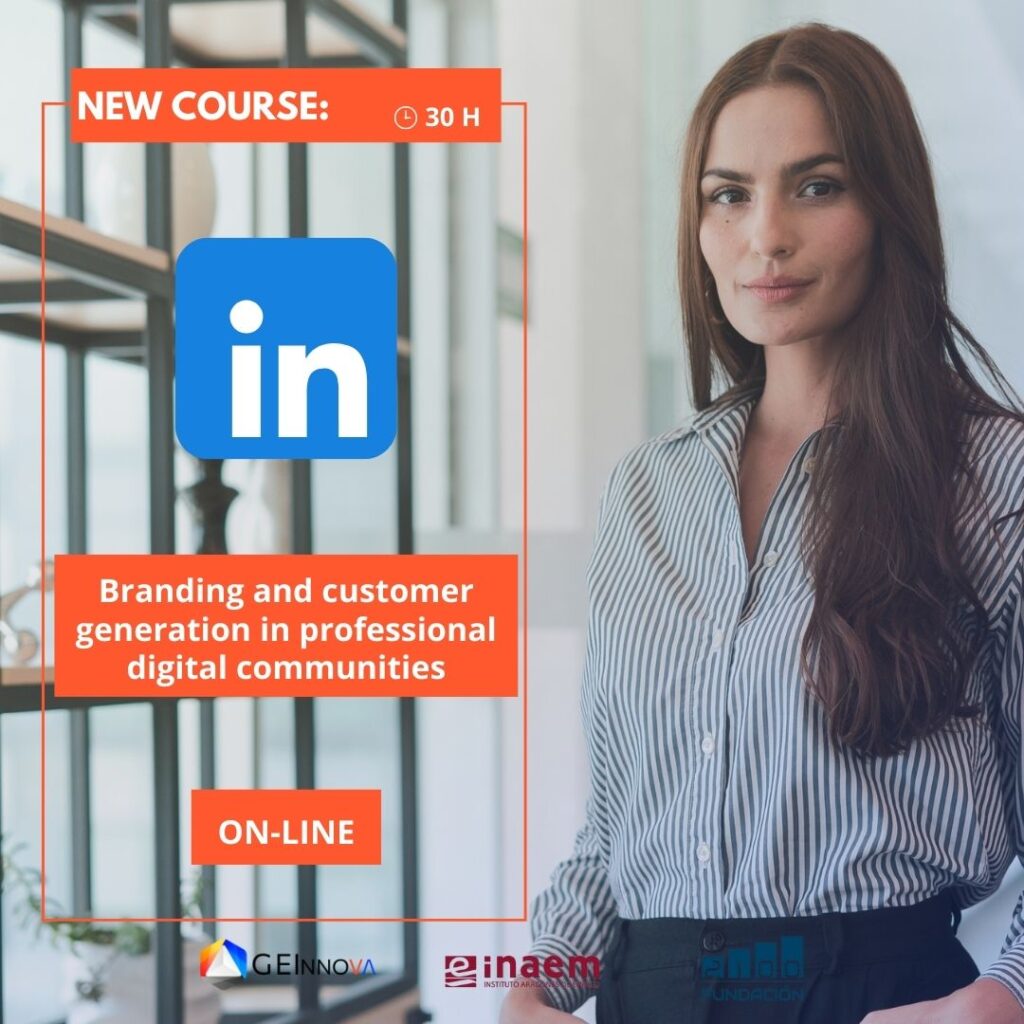
A new opportunity to boost your LinkedIn profile!

In today’s world, a strong digital presence is key to standing out in any industry. LinkedIn has become the leading platform for professionals, and now you have the opportunity to take advantage of its full potential.

We present the LinkedIn: Branding and Customer Generation in Professional Digital Communities course , delivered by Geinnova, INAEM and Fundación 2100. This programme is designed to provide you with the necessary tools and strategies to optimise your profile, generate business opportunities and expand your professional network. Furthermore, at the end of the course, you will receive an official certificate from INAEM accrediting your new skills.

What will you learn in this course?

  • Personal branding: Discover how to optimise your LinkedIn profile to reflect your experience and skills in a professional and attractive way.
  • Networking strategies: Learn how to create meaningful connections and build a strong network to boost your career.
  • Lead and lead generation: Master the key techniques for converting contacts into real business opportunities.
  • Positioning in digital communities: Take advantage of LinkedIn as a platform to be a reference in your sector and lead relevant conversations.

Course programme

  1. LinkedIn for Branding
    • Duration: 5 hours
    • Learn how to build a strong and attractive personal brand for other LinkedIn users.
  2. The leading network to generate clients
    • Duration: 5 hours
    • Strategies for finding and generating clients on LinkedIn, taking advantage of the platform’s tools.
  3. Quality Talent on LinkedIn
    • Duration: 5 hours
    • How to attract and recruit quality talent using LinkedIn’s professional networks.
  4. Increase your sales with LinkedIn
    • Duration: 6 hours
    • Techniques and strategies to increase your sales and create real business opportunities through LinkedIn.
  5. Advanced content strategies on LinkedIn
    • Duration: 5 hours
    • Learn how to create attractive and relevant content that will help you position yourself and gain visibility on LinkedIn.
  6. LinkedIn Advertising
    • Duration: 4 hours
    • Take advantage of LinkedIn advertising options to reach a wider and more targeted audience.

Why choose this course?

  • Up to date with the latest trends: The course provides you with the most up-to-date tools to stand out in a competitive digital environment.
  • Practical approach: You will not only learn theory; you will apply what you learn with practical exercises that you can implement from day one.
  • Ongoing support: Our team of experts will be on hand to answer any questions and make sure you get the most out of this training programme.

Don’t miss this opportunity to transform your career!

This course is aimed at professionals from all sectors who want to strengthen their LinkedIn presence, establish their personal brand and seize new business opportunities.

Geinnova-Proyecto-Soul Food
Projects

Soul Food

KA220-ADU-8E9C92E7

Soul Food pathways: Skills, Opportunities, Empowerment and Learning of Migrant Women through Food

Soul Food is an initiative that promotes social inclusion through culinary education and cultural exchange, focused on empowering migrant women to close skills gaps and foster their social and labour integration. Using digital and blended learning methodologies, the project seeks to dismantle cultural and language barriers, creating inclusive environments that favour equity and equality. This project is part of the Erasmus+ programme and involves partners from several European countries committed to inclusion and empowerment through education.

Soul Food’s approach is based on the belief that cooking, as a universal language, has the power to bring people together, transcending cultural differences and generating mutual understanding. Through this initiative, it seeks not only to offer job training opportunities, but also to provide a space where migrant women can express their cultural identity and connect with the local community in a meaningful way.

The Soul Food project has several main objectives:

  1. Firstly, it seeks to increase the integration of migrant women through the development of professional skills, citizenship competencies and social inclusion. The project offers personalised educational pathways, especially in culinary skills, to reduce skills gaps and labour market shortages, fostering a sense of belonging and active participation in the community.
  2. Another key objective is to promote the self-sufficiency of migrant women by providing them with the necessary tools to access employment opportunities and improve their quality of life. In addition, Soul Food focuses on improving the competencies of educators to effectively support a diverse student population, using digital tools and innovative methodologies. The training of educators is crucial to ensure that migrant women are adequately supported during their integration and learning process.


The project expects to achieve the following results:

  1. Modular Curriculum: Focusing on culinary skills, citizenship and digital learning. This curriculum includes modules on personal development and citizenship to promote the social integration and empowerment of migrant women. The modules are designed to be flexible and accessible, allowing participants to learn at their own pace and tailor their training to their specific needs.
  2. Cultural Exchange and Community Building: Organisation of workshops and cooking-based events to facilitate cultural exchange and the creation of inclusive spaces where migrant women can interact with the local community. These events not only aim to teach cooking skills, but also to foster a sense of belonging and build meaningful relationships between participants and members of the host community.
  3. Training of Educators: Development of digital tools and guidelines for educators, designed to improve the quality of education and enable the replication of innovative practices in the field of migrant integration. The training will focus on inclusive methodologies and empathy-based learning approaches, which are critical for working with vulnerable and diverse populations.
  4. Creation of Digital Learning Environments: Development of digital platforms that facilitate online learning and interaction between migrant women, educators and the community. These platforms will include multimedia educational resources and interactive modules to foster engaging and effective learning, ensuring that migrant women have access to modern tools to enhance their digital competencies.


The project partners are Austria, Sweden, Italy, Greece and Spain.

Acronym: Soul Food

Start date: 01-09-2024

End date: 31-08-2026

Geinnova-Proyecto-CulTMed
Projects

CulTMed

KA

CulTMed: Sustainable cultural tourism in the Mediterranean

Cultural tourism is a key sector for the EU economy, especially in the Mediterranean basin, where a wealth of cultural and natural heritage is concentrated. However, cultural tourism faces numerous challenges, such as loss of authenticity, over-commercialisation and negative environmental impact. CulTMed is presented as an innovative solution to address these challenges, promoting a sustainable and green approach to preserve cultural heritage while improving the quality of life of local communities. This project aims to turn cultural tourism into a sustainable development tool that respects both host communities and the environment.

The CulTMed project has several main objectives:

  1. Firstly, it will enhance the capacity of professionals and stakeholders in the cultural tourism sector through training and development of key competences. To this end, innovation networks will be fostered to enable the transfer of good practices between the different professionals and organisations in the sector.
  2. One of the main pillars of the project is the elaboration of a Best Practices report and the creation of a Digital Resource Library, which will serve as an accessible knowledge platform for all those interested in sustainability in the field of cultural tourism.
  3. CulTMed also seeks to actively involve local communities in the creation of more sustainable tourism models, ensuring that these communities benefit directly from tourism development. Furthermore, the project focuses on inclusion, gender equality and diversity, ensuring that all stakeholders have the opportunity to participate and contribute to the outcomes.

As part of the expected outcomes, the project will develop four distinct curricula, each focusing on an aspect of sustainable cultural tourism. These curricula will be designed to provide specific training to enable professionals and organisations in the sector to improve their skills and knowledge in sustainable practices:

  1. Sustainable Cultural Events: This curriculum will focus on how to organise and manage cultural events in a sustainable manner, minimising environmental impact and promoting responsible practices.
  2. Archaeological Site Tourism: This curriculum will address best practices for managing archaeological sites with a sustainable approach, ensuring heritage preservation and promoting respect for history and the environment.
  3. Museums/Galleries and Sustainability: This curriculum will teach how museums and galleries can adopt sustainable practices, both in exhibition management and daily operations, to contribute to sustainable development.
  4. Local Communities and Sustainable Cultural Tourism: This curriculum will focus on how local communities can engage in and benefit from sustainable cultural tourism, ensuring that tourism development is inclusive and equitable. CulTMed will also implement Living Labs, which will act as experimental spaces where new ideas and approaches to cultural tourism can be tested in less popular local communities. These Living Labs will allow local communities and other stakeholders to collaborate in the development of customised solutions that respond to their specific needs. In addition, a series of events involving policy makers, sustainability experts and community leaders will be organised to disseminate the project results and ensure their adoption at regional and European level. In this way, it is expected that the good practices collected, taught and tested will contribute to promote significant changes across EU society, fostering a more inclusive and environmentally friendly model of cultural tourism.


The project partners, committed to the vision of achieving a sustainable transition in the EU, are Spain, Greece, Cyprus, Italy and Portugal.

Acronym: CultMed

Start date:

End date:

Geinnova-Proyecto-NextSmes
Projects

NextSMEs

KA220-VET-7D8AF0E8

Next Generation SMEs: promoting succession planning for family-led businesses

The NextSMEs project aims to provide current and future owners of small and medium-sized family businesses (SMEs) with the knowledge and tools necessary to ensure the continuity, sustainability and success of their businesses beyond the third generation. In this context, the project focuses on responding to the specific needs of these businesses, addressing challenges related to succession, market adaptation and long-term business sustainability.

To achieve this goal, NextSMEs will develop a vocational education and training (VET) programme specifically designed for family SMEs. This programme will offer a balanced mix of skills and learning opportunities with practical and personalised content, aligned with the demands of the evolving labour market. The project will also seek to modernise the vocational training system to make it more attractive and innovative, using participatory and co-creative approaches, and to improve the processes of recognition and validation of competences through micro-credentials, which will enable a more dynamic and professional environment for these family businesses.

NextSMEs addresses three key priorities of the Erasmus+ programme:

  1. Adapting vocational training to the needs of the labour market: The project develops a flexible, learner-centred VET programme specifically designed for current and future owners of family SMEs. An online course is proposed to address current and future challenges of these enterprises, including professionalisation, decision-making, succession and internal conflict resolution. This approach aims to prepare family entrepreneurs to face the demands of the labour market, ensuring that enterprises remain competitive and sustainable in a constantly changing business environment.
  2. Increasing flexibility of opportunities in vocational education and training: NextSMEs aims to close existing gaps in access to training for working-age adults and family business owners through innovative and adaptive educational approaches. The project will conduct a participatory SWOT analysis to identify the specific training needs of these businesses, and from there, develop a curriculum that addresses issues such as business succession, financial sustainability and family conflict management.
  3. Contribution to innovation in vocational training: The project promotes the creation of a digital training curriculum that will be offered as an open educational resource (OER) and integrated into VET programmes at European level. This will enable VET providers to adapt their methods and content to the specific needs of family SMEs, fostering innovation and long-term sustainability.

Concrete outputs of the project include a transnational report on the situation of family SMEs in Europe, a training curriculum with micro-credentials covering crucial aspects such as succession planning, financial management and professionalisation, and an online educational platform where SME owners will be able to access the training modules and participate in local pilot activities to test and validate the contents. In addition, a strategic plan for succession planning and conflict resolution in family businesses will be developed, together with a cross-cutting plan for sustainability, dissemination and monitoring of the project’s impact.

The project partners are Germany, Cyprus, Belgium, Italy and Spain.

Acronym: NextSMEs

Start date: 01-09-2024

End date: 31-08-2026

Geinnova-FECAM (1)
Home News News

GEINNOVA offers training services to FECAM: Local Community Development and Promotion of Local Economy

The Canarian Federation of Municipalities (FECAM) has requested our services to offer a comprehensive training programme called Local Community Development and Promotion of Local Economy. This course, which will be delivered online, is designed for local government workers in the Canary Islands, and aims to enhance economic development strategies and community participation.

In addition, we have developed a tailor-made eLearning platform for FECAM, which, in addition to the training contents, includes forums and webinars to facilitate interaction and collaborative learning.

Training details

The programme is structured in five key modules, with a total duration of 40 hours:

  1. Fundamentals of Local Development and Legal Framework (7 hours): Focused on the legal framework of local development in the Canary Islands and the role of the Local Development Agent.
  2. Strategies and Tools for Economic Diversification (8 hours): Analysis of the local economic environment and strategies for sectoral and territorial diversification.
  3. Promotion of Employment and Local Entrepreneurship (9 hours): Diagnosis of the employment situation and strategies to promote employment and entrepreneurship.
  4. Innovation and Entrepreneurial Development (9 hours): Promotion of entrepreneurial culture and support for the consolidation of innovative companies.
  5. Environmental Sustainability and Local Sustainable Development (7 hours): Integration of sustainable practices in local development and citizen participation.

Objectives and scope

This programme aims to provide participants with an in-depth understanding of local development and to train them in the identification and use of local resources. In addition, it will focus on the planning of economic promotion strategies, fostering collaboration between institutions and community participation to strengthen the economic fabric of the region.

At GEINNOVA, we are proud to continue working in partnerships that boost the professional development and effectiveness of local government workers. This initiative reflects our commitment to quality training and skills enhancement for positive community impact.

We look forward to continuing to contribute to local development and innovation in the Canary Islands!

Course dates: 14 October to 30 November 2024.